

What is ABA Therapy?
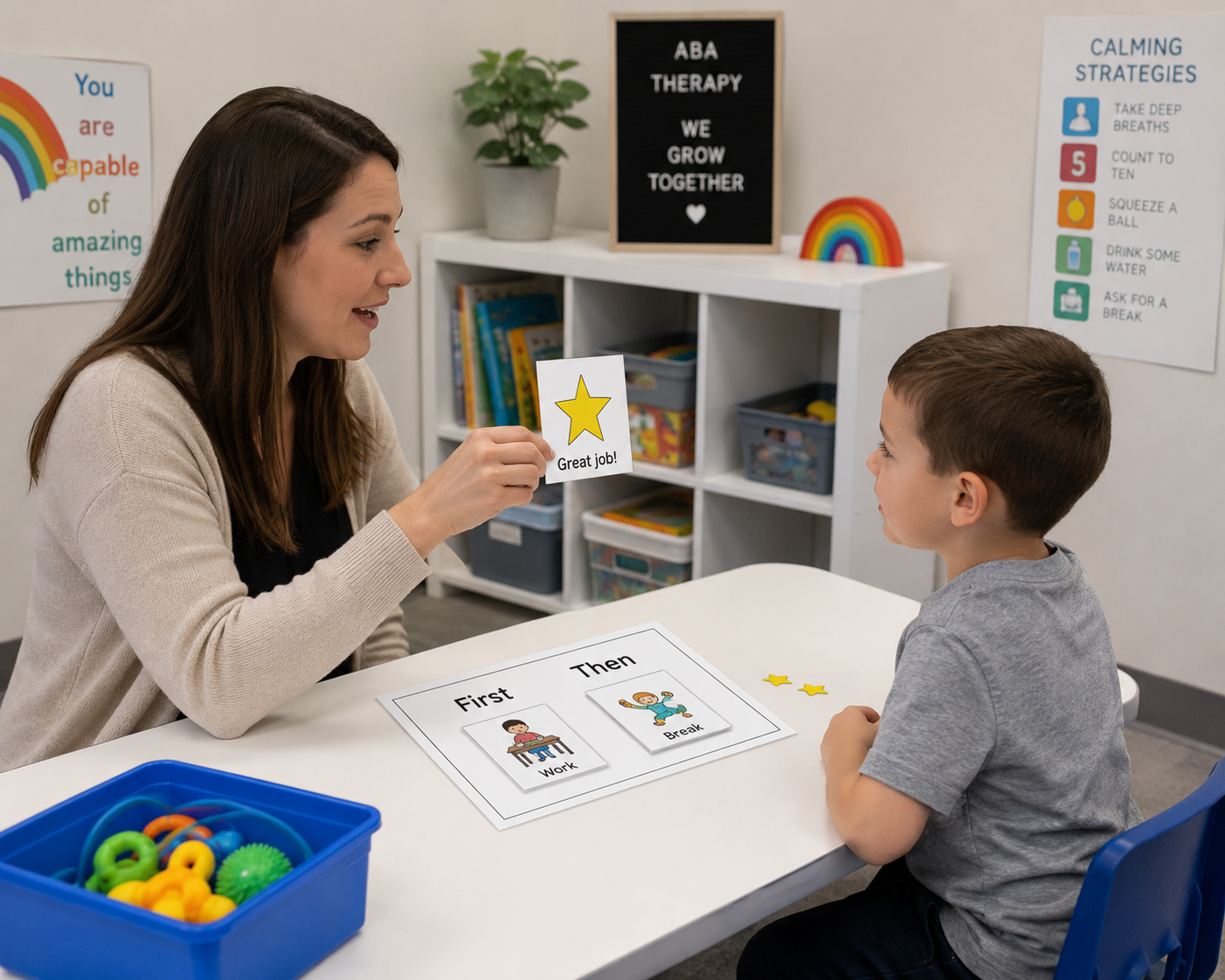
ABA therapy applies our understanding of behavior to real-life situations. The goal of ABA therapy is to decrease harmful behaviors and increase positive ones. Since ABA is a flexible treatment program, your child’s Behavior Technician will adapt it to fit their specific needs.
One of the main strategies used in autism ABA therapy is positive reinforcement. First, the Behavior Technician will observe your child and identify a goal behavior for them to work toward. Every time your child enacts this behavior, they will receive a personal reward such as praise, a toy or more playtime. Positive rewards will encourage your child to continue this behavior, which leads to lasting change.
The second strategy used in ABA therapy is teaching children to understand antecedents — what happens before your child enacts a behavior and the consequences that occur after this behavior. By understanding why your child is performing a behavior, our clinicians can comprehend how consequences affect the likelihood of your child repeating a behavior.
Service Models
-
(25-40 hours per week) Targeting a wide variation of skills impacted by the client's autism diagnosis, the client will receive 1:1 intervention by an RBT tailored to their needs.
-
(10-25 hours per week) More focused intervention utilizing the 1:1 execution of intervention by an RBT, with emphasis on areas in which the client struggles (i.e. communication, social skills, etc.).
-
The BCBA will meet with caregivers on a regular basis for training on the basic principles of ABA, and how to independently execute programming outside of direct service hours, as well as responses to concerns for novel behavioral exhibitions or other isolated events.
-
Sessions focus on a range of different skill sets, from development of a larger food repertoire, to simply remaining seated at the table with family during meal times. Additional assessment is needed to include this method of intervention and if the family is interested in adding feeding intervention to the treatment plan notification is required within the referral or initial assessment interviews with the treating BCBA. Treatment is also subject to medical limitations to protect the safety of the client at all times.
In-Home Intervention
Services are provided in home and community settings and are individualized to meet the needs of each client and family. Services include behavioral assessment, treatment implementation, caregiver training, and skill acquisition programming targeting socially significant behaviors in the areas of communication, social interaction, adaptive behavior, safety, and daily living skills. Interventions are evidence-based, data-driven, and focused on producing meaningful and durable behavior change.
Community-based services are utilized when clinically appropriate to promote generalization and maintenance of skills across people, settings, and environments. Caregiver collaboration and training are integrated throughout service delivery to support treatment fidelity, long-term outcomes, and continued success beyond direct intervention.


School Based Intervention
Under One Umbrella collaborates with school personnel to provide individualized, school-based behavioral services that support the implementation of behavior intervention plans and educational goals outlined within the student's Individualized Education Program (IEP). Services focus on increasing successful participation in the educational environment through skill acquisition, behavior reduction strategies, and the development of adaptive, social, and self-management skills. Behavioral interventions are implemented using evidence-based, data-driven practices and are designed to promote meaningful and sustainable behavior change.
Consultation, coaching, and training are provided to educational staff to support treatment fidelity, build staff capacity, and facilitate the gradual transfer of intervention responsibilities to natural supports within the school setting. Services emphasize generalization and maintenance of skills across environments, staff members, and educational activities to promote long-term success and independence.

Assessment
An initial assessment will be conducted in the clients home prior to the onset of direct ABA intervention. A clinical evaluation is completed between the BCBA and the client, paired with a parent/ guardian interview. The results of the assessment will be used for planning treatment hours, method of intervention and location of treatment. The BCBA will work in conjunction with the family/ guardian and client to determine the course of treatment before the initiation of services. Additional assessments will be completed on a bi-yearly basis, or as required.

Ready to Get Started?
Please complete the intake documentation attached below for the opportunity for your child to receive intervention with our experienced team of Registered Behavioral Technicians (RBT), Board Certified Assistant Behavior Analysts (BCaBA) and Board Certified Behavior Analysts (BCBA)